


Hazard function, reliability function and mean time to failure of dams
1
Faculty of Civil Engineering and Geodesy, Military University of Technology in Warsaw, Poland
Submission date: 2024-07-22
Final revision date: 2024-12-01
Acceptance date: 2025-02-20
Publication date: 2026-06-14
Corresponding author
Leszek Opyrchał
Faculty of Civil Engineering and Geodesy, Military University of Technology in Warsaw, Poland
Faculty of Civil Engineering and Geodesy, Military University of Technology in Warsaw, Poland
Archives of Civil Engineering 2026;72(2):231-246
KEYWORDS
TOPICS
ABSTRACT
Dams are among the largest structures constructed by human. Their disasters result in numerous casualties and large material losses. The statistical analysis of the reasons for dam disasters was carried out by the International Commission on Large Dams (ICOLD). The analysis included large dams, i.e. dams that are higher than 15 meters or taller than 5 meters and form a reservoir with a capacity of more than 3×10^6 m3. ICOLD's study took into account dams built up to 1986 regardless of the type of construction and the material used.
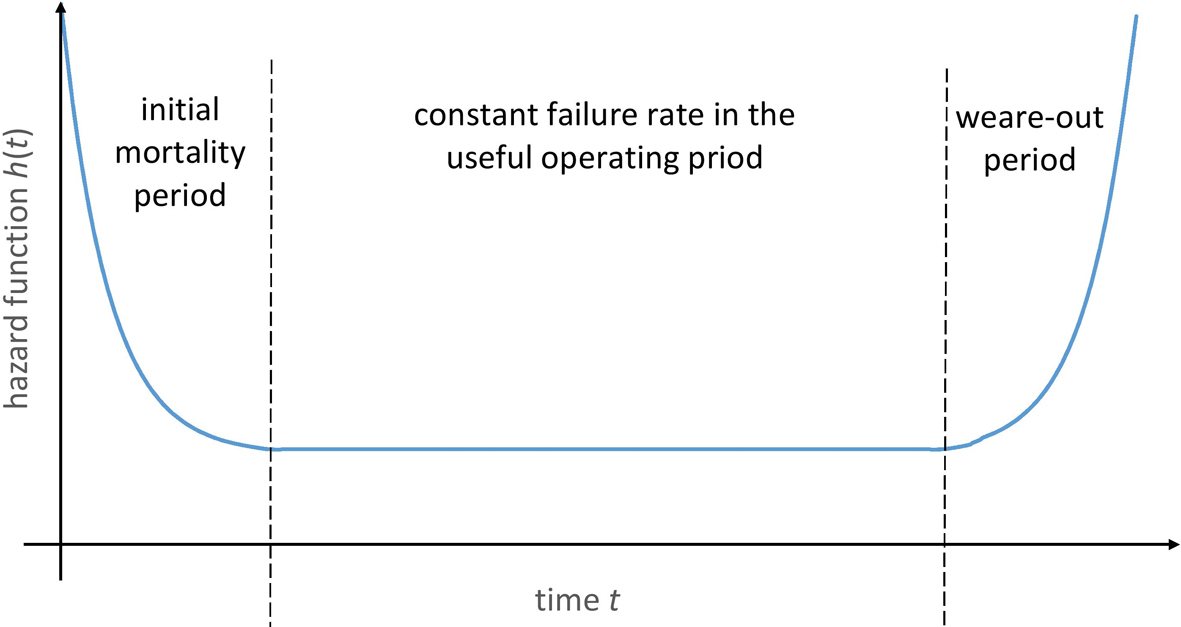
The hazard function h(t) and next, the reliability function R(t) were calculated based on that data, using the fitting of the power function in the initial mortality period and a constant function in the useful operation period. The knowledge of the reliability function allowed for calculating the mean time to failure which was 112957 ± 12443 years. It was also demonstrated that in the operation period the annual dam failure ratio is 8.719×10^-6 ± 0.297×10^-6. It is a value that is proximate to the recommendations of the U.S. Army Corps of Engineers which suggests the tolerance for the annual dam disaster risk not to exceed 10-6 failures per year for newly-constructed dams and 10^-4 failures per year for already existing ones.
Share
RELATED ARTICLE
| eISSN: | 2300-3103 |
| ISSN: | 1230-2945 |

We process personal data collected when visiting the website. The function of obtaining information about users and their behavior is carried out by voluntarily entered information in forms and saving cookies in end devices. Data, including cookies, are used to provide services, improve the user experience and to analyze the traffic in accordance with the Privacy policy. Data are also collected and processed by Google Analytics tool (more).
You can change cookies settings in your browser. Restricted use of cookies in the browser configuration may affect some functionalities of the website.
You can change cookies settings in your browser. Restricted use of cookies in the browser configuration may affect some functionalities of the website.