


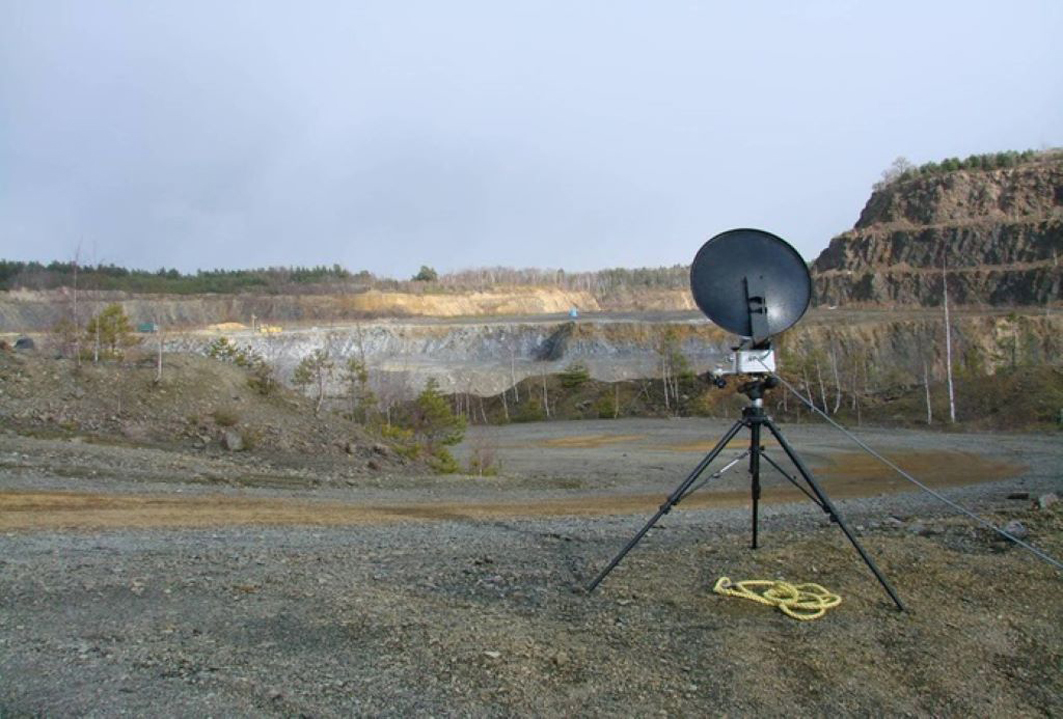
Alternative method for determining grain size distribution with use Doppler radar

1
Department of Engineering Geology, Hydrogeology and Applied Geophysics, Comenius University Bratislava,, Slovak Republic
2
Department of Engineering Geology, Hydrogeology and Applied Geophysics, Comenius University Bratislava, Slovak Republic
Submission date: 2024-12-08
Final revision date: 2025-03-10
Acceptance date: 2025-03-20
Publication date: 2026-06-14
Corresponding author
Juraj Ortuta
Department of Engineering Geology, Hydrogeology and Applied Geophysics, Comenius University Bratislava,, Ilkovičova 6, 84215, Bratislava, Slovak Republic
Department of Engineering Geology, Hydrogeology and Applied Geophysics, Comenius University Bratislava,, Ilkovičova 6, 84215, Bratislava, Slovak Republic
Archives of Civil Engineering 2026;72(2):571-586
KEYWORDS
TOPICS
ABSTRACT
Blasting mining is a set of activities that can be divided into a sequence of repetitive tasks. Primarily it is drilling, blasting, loading with the hauling and crushing. Drilling and blasting have the greatest impact on the economic indicator of the whole process. Their aim is to achieve the most optimal fragmentation of the blasting wall. It follows that an accurate and efficient fragmentation assessment process is one of the main indicators of blasting efficiency. Nowadays, sieve analysis is the most accurate method. However, this is a time-consuming and labour-intensive method. This is a predictive method, the disadvantage of which is the absence of the actual fragment size, which is also associated with inaccuracy. Currently, when the emphasis is on optimizing processes with environmental impact, finding a more efficient evaluation method that provides more accurate results than classical prediction procedures is even more relevant. The question of evaluating the grain size has been considered by many experts. This paper discusses the use of the reflection of flying fragments and their evaluation by Doppler radar directly during blasting. These measurements specify the size of the fragments and blasting speed up the process of evaluating the grain size of the muck-pile material.
| eISSN: | 2300-3103 |
| ISSN: | 1230-2945 |

We process personal data collected when visiting the website. The function of obtaining information about users and their behavior is carried out by voluntarily entered information in forms and saving cookies in end devices. Data, including cookies, are used to provide services, improve the user experience and to analyze the traffic in accordance with the Privacy policy. Data are also collected and processed by Google Analytics tool (more).
You can change cookies settings in your browser. Restricted use of cookies in the browser configuration may affect some functionalities of the website.
You can change cookies settings in your browser. Restricted use of cookies in the browser configuration may affect some functionalities of the website.