


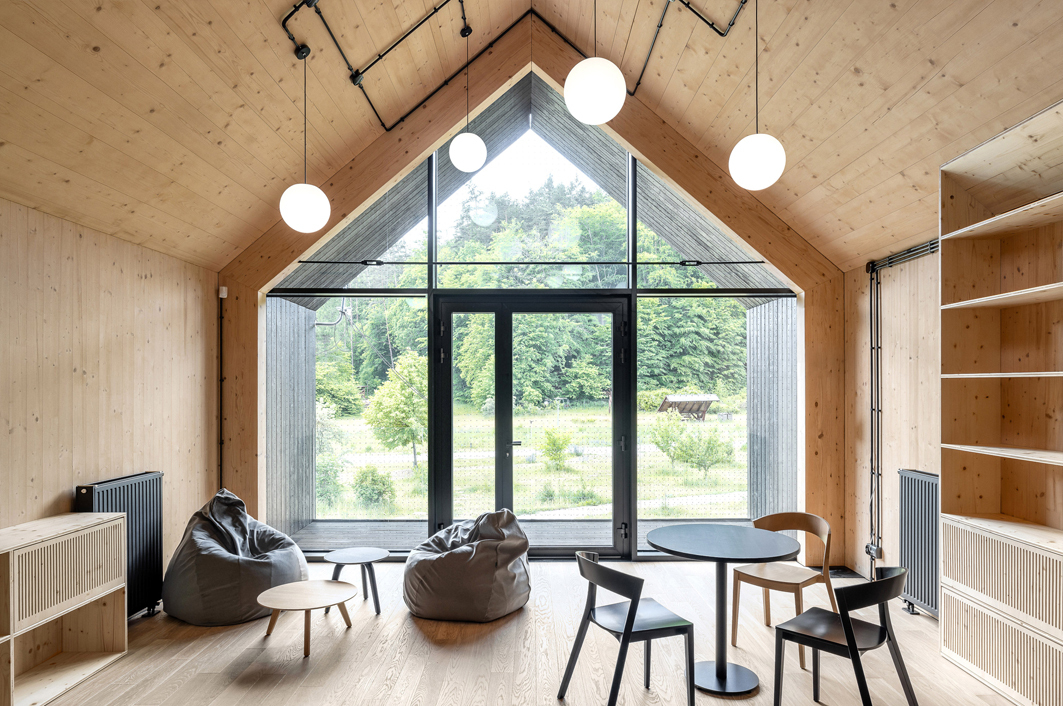
Environmental life cycle assessment (LCA) of model massive timber and concrete buildings. Implementation of cross-laminated timber (CLT) in an educational facility at the Forest Botanical Garden “Marszewo” in Gdynia
1
Faculty of Architecture, Cracow University of Technology, Poland
These authors had equal contribution to this work
Submission date: 2024-12-28
Final revision date: 2025-05-27
Acceptance date: 2025-06-13
Publication date: 2026-06-14
Corresponding author
Marcin Gierbienis
Faculty of Architecture, Cracow University of Technology, Warszawska 24, 31-155, Kraków, Poland
Faculty of Architecture, Cracow University of Technology, Warszawska 24, 31-155, Kraków, Poland
Archives of Civil Engineering 2026;72(2):587-605
KEYWORDS
TOPICS
ABSTRACT
In the second half of the 21st century, the effects of climate change associated with population growth, aggressive urbanisation and the resulting deterioration of the natural environment have become particularly noticeable. In terms of modern construction and sustainable design, it is valuable to subject a building to a life cycle analysis (LCA), which covers the investment process from design to production of materials, erection of the building, operation and potential demolition. Wood, a natural raw material present in architecture for centuries, unites the ecological, economic and social principles of sustainable design. Thanks to innovative processing techniques such as cross-laminated timber (CLT) technology, wood can meet the challenges of modernity. Given the growing consumer interest in pro-environmental attitudes and the tightening of European Union regulations, the main emphasis will likely be on selecting environmentally friendly materials with a low carbon footprint, favourable energy balance, and ultimately, recovery potential. Based on this hypothesis, the paper presents a comparative LCA analysis of use CLT and concrete technology for the construction of an educational building at the Marszewo Forest Botanical Garden in Gdynia.
Share
RELATED ARTICLE
| eISSN: | 2300-3103 |
| ISSN: | 1230-2945 |

We process personal data collected when visiting the website. The function of obtaining information about users and their behavior is carried out by voluntarily entered information in forms and saving cookies in end devices. Data, including cookies, are used to provide services, improve the user experience and to analyze the traffic in accordance with the Privacy policy. Data are also collected and processed by Google Analytics tool (more).
You can change cookies settings in your browser. Restricted use of cookies in the browser configuration may affect some functionalities of the website.
You can change cookies settings in your browser. Restricted use of cookies in the browser configuration may affect some functionalities of the website.