


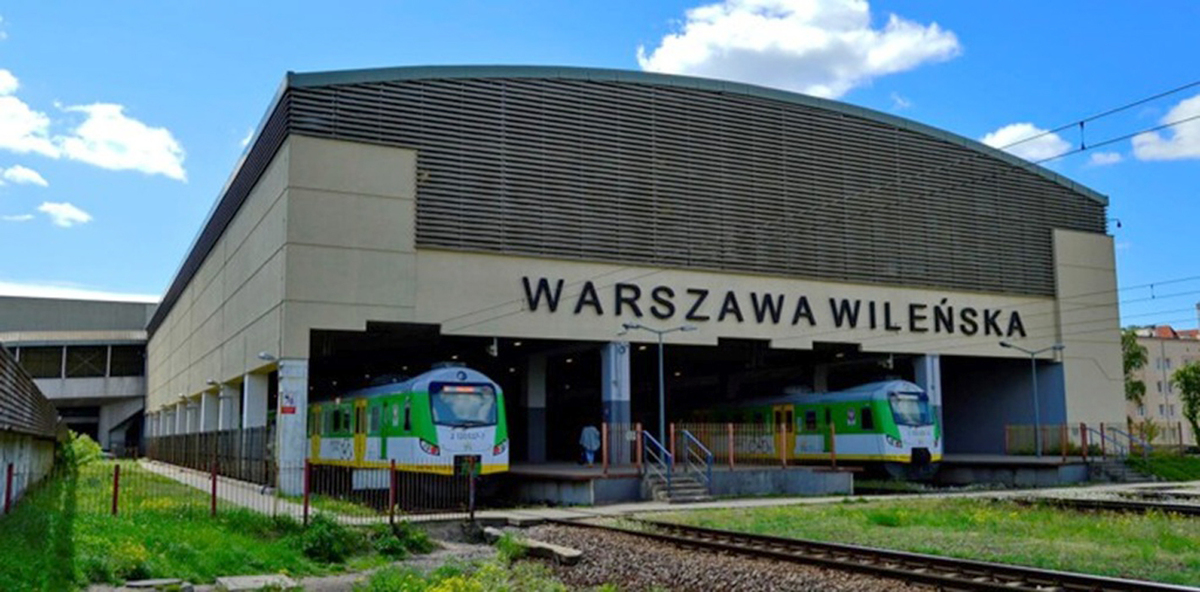
Adaptation and redevelopment of the Warszawa Wileńska railway station into a commercial centre with a covered terminal

1
Civil Engineering Faculty, Warsaw University of Technology, Poland
2
School of Engineering, University of Minho, Portugal
Submission date: 2025-06-17
Acceptance date: 2025-07-08
Publication date: 2025-12-01
Corresponding author
Mariola Violeta Książek-Nowak
Civil Engineering Faculty, Warsaw University of Technology, Armii Ludowej, 16, Warsaw, Poland
Civil Engineering Faculty, Warsaw University of Technology, Armii Ludowej, 16, Warsaw, Poland
Archives of Civil Engineering 2025;71(4):255-265
KEYWORDS
urban revitalizationredevelopmentcommercial centrerailway stationpublic private partnershipproject management
TOPICS
ABSTRACT
Contemporary cities are facing the challenge of integrating public spaces, transport systems, and commercial functions, which is reflected in the revitalization processes of historic buildings. In the transformation of urban spaces, it is essential to preserve cultural heritage while respecting the historical value of architectural monuments and adapting them to contemporary needs and the principles of sustainable development. These include improving energy efficiency, employing renewable energy sources, and implementing circular economy practices. This article presents selected issues related to the comprehensive redevelopment and revitalization of the Warszawa Wileńska Railway Station—a historic facility originally constructed in 1862 as the Petersburg Station. The project, carried out under challenging conditions involving continuous passenger traffic, dense urban development, and proximity to historic tenement buildings, required the development of non-standard design, logistical, and fire safety procedures. Moreover, the construction process necessitated close cooperation with Polish State Railways (PKP) and numerous other institutions. This investment serves as an example of an innovative approach to the revitalization and integration of railway infrastructure with a multifunctional and commercially oriented shopping complex, becoming a symbol of modern revitalization efforts.
Share
RELATED ARTICLE
| eISSN: | 2300-3103 |
| ISSN: | 1230-2945 |

We process personal data collected when visiting the website. The function of obtaining information about users and their behavior is carried out by voluntarily entered information in forms and saving cookies in end devices. Data, including cookies, are used to provide services, improve the user experience and to analyze the traffic in accordance with the Privacy policy. Data are also collected and processed by Google Analytics tool (more).
You can change cookies settings in your browser. Restricted use of cookies in the browser configuration may affect some functionalities of the website.
You can change cookies settings in your browser. Restricted use of cookies in the browser configuration may affect some functionalities of the website.
