


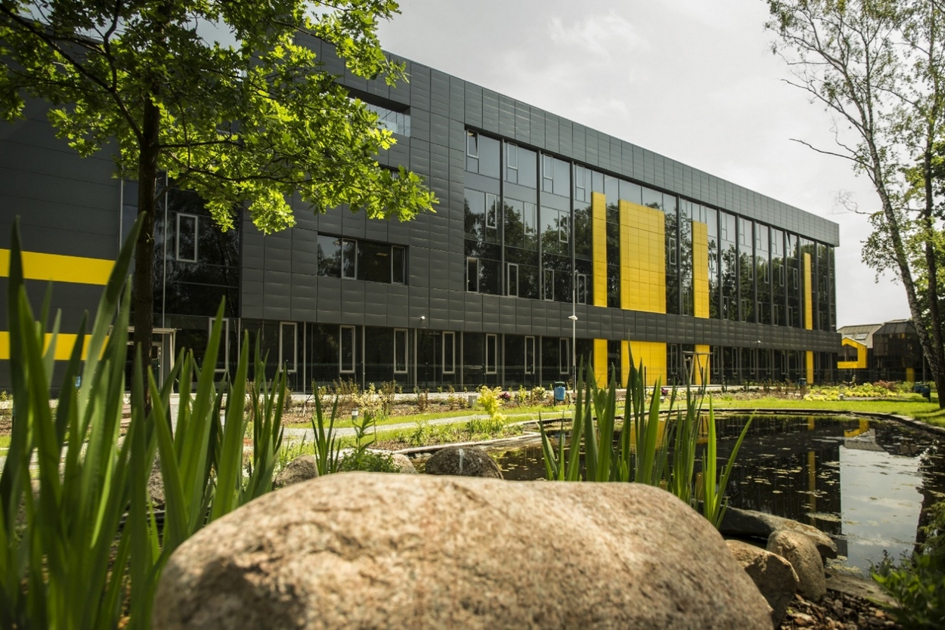
Ecological case for revitalization – quantifying CO2 and construction waste savings in post-industrial urban regeneration
1
Faculty of Civil Engineering, Warsaw University of Technology, Poland
2
Department of Computer Science, Universitat de Valencia, Spain
3
Faculty of Economics and Business Sciences, University of Granada, Spain
Submission date: 2025-06-10
Final revision date: 2025-08-18
Acceptance date: 2025-08-26
Publication date: 2025-12-01
Corresponding author
Janusz Sobieraj
Faculty of Civil Engineering, Warsaw University of Technology, Armii Ludowej 16, 00-637, Warsaw, Poland
Faculty of Civil Engineering, Warsaw University of Technology, Armii Ludowej 16, 00-637, Warsaw, Poland
Archives of Civil Engineering 2025;71(4):239-254
KEYWORDS
life cycle assessmentcarbon footprintcircular economysustainable constructionadaptive reuseindustrial revitalization
TOPICS
ABSTRACT
The construction sector’s environmental footprint, accounting for 40% of global CO₂ emissions and 30% of waste generation, necessitates rigorous evaluation of sustainable alternatives to demolition. This study quantitatively assesses the environmental advantages of industrial site revitalization versus demolition and new construction, focusing exclusively on material conservation and emission reduction. While existing research often combines environmental with socioeconomic metrics, this analysis isolates ecological impacts through a case study of Radex Park Marywilska in Warsaw, Poland—a representative post-industrial site in a coal-dependent economy. Using life cycle assessment (LCA) methodology, we analyze material flows and calculate avoided emissions using region-specific factors. The results demonstrate that revitalization preserved 72,315 tons of materials and reduced CO₂ emissions by 48,217 tons—equivalent to a 56–82% improvement over demolition scenarios, exceeding Central European benchmarks. These savings stem primarily from bypassed demolition waste and avoided new material production, aligning with EU circular economy targets. Key findings include: (1) structural reuse achieves greater emission reductions than energy efficiency upgrades in the operational phase; (2) Poland’s carbon-intensive industrial baseline amplifies the relative benefits of adaptive reuse; and (3) standardized “avoided cost” metrics can bridge policy gaps in sustainable urban planning. The study provides a replicable framework for environmental cost accounting in post-industrial contexts, emphasizing the need for regionally tailored LCA models. We conclude that revitalization is not merely an alternative but an ecological imperative for decarbonizing urban development. Future research should expand this methodology to assess the scalability of observed benefits across diverse geographic and industrial contexts.
Share
RELATED ARTICLE
| eISSN: | 2300-3103 |
| ISSN: | 1230-2945 |

We process personal data collected when visiting the website. The function of obtaining information about users and their behavior is carried out by voluntarily entered information in forms and saving cookies in end devices. Data, including cookies, are used to provide services, improve the user experience and to analyze the traffic in accordance with the Privacy policy. Data are also collected and processed by Google Analytics tool (more).
You can change cookies settings in your browser. Restricted use of cookies in the browser configuration may affect some functionalities of the website.
You can change cookies settings in your browser. Restricted use of cookies in the browser configuration may affect some functionalities of the website.