


Mechanical characteristics of coarse soil improved by fibre and cement additions
1
Department of Geotechnics, Roads and Geodesy, Bialystok University of Technology, Poland
2
Department of Geotechnics, Roads and Geodesy, Białystok University of Technology, Poland
Submission date: 2025-09-03
Acceptance date: 2025-09-16
Publication date: 2026-09-25
Corresponding author
Katarzyna Zabielska-Adamska
Department of Geotechnics, Roads and Geodesy, Bialystok University of Technology, Wiejska 45A, 15-351, Bialystok, Poland
Department of Geotechnics, Roads and Geodesy, Bialystok University of Technology, Wiejska 45A, 15-351, Bialystok, Poland
Archives of Civil Engineering 2026;72(3):257-268
KEYWORDS
TOPICS
ABSTRACT
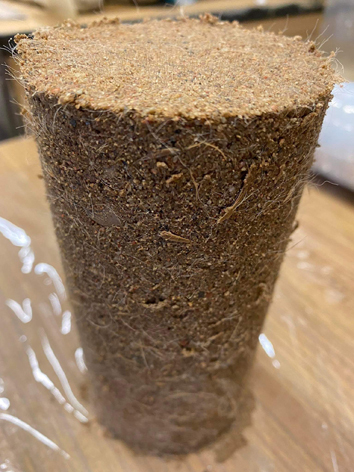
The study aimed to present the differences in the mechanical characteristics of gravelly sand after adding a small amount of cement and/or fibre reinforcement. The tests were conducted on compacted non-cohesive soil – the gravelly sand or gravelly sand improved with 1.5% cement addition. Polypropylene fibres of 18 mm length were used, which were added in amounts of 0.1%, 0.2% and 0.3% to the dry mass of the soil. Gravelly sand was compacted at the optimum water content to the maximum dry density using the standard Proctor energy. The soil samples were sheared under triaxial compression conditions. Adding fibres changed the behaviour of the sample towards plasticisation of the material. The fibre content increases the maximum shear strength, which is obtained under a greater relative deformation. The failure mode of the lightly cement-bonded soil is characterized as a semi-brittle material, whereas that of the uncemented gravelly sand is the ductile mode. The failure plane of the soil with added fibres is close to horizontal, which means that the fibre-reinforced material has entered the plastic zone.
Share
RELATED ARTICLE
| eISSN: | 2300-3103 |
| ISSN: | 1230-2945 |

We process personal data collected when visiting the website. The function of obtaining information about users and their behavior is carried out by voluntarily entered information in forms and saving cookies in end devices. Data, including cookies, are used to provide services, improve the user experience and to analyze the traffic in accordance with the Privacy policy. Data are also collected and processed by Google Analytics tool (more).
You can change cookies settings in your browser. Restricted use of cookies in the browser configuration may affect some functionalities of the website.
You can change cookies settings in your browser. Restricted use of cookies in the browser configuration may affect some functionalities of the website.