


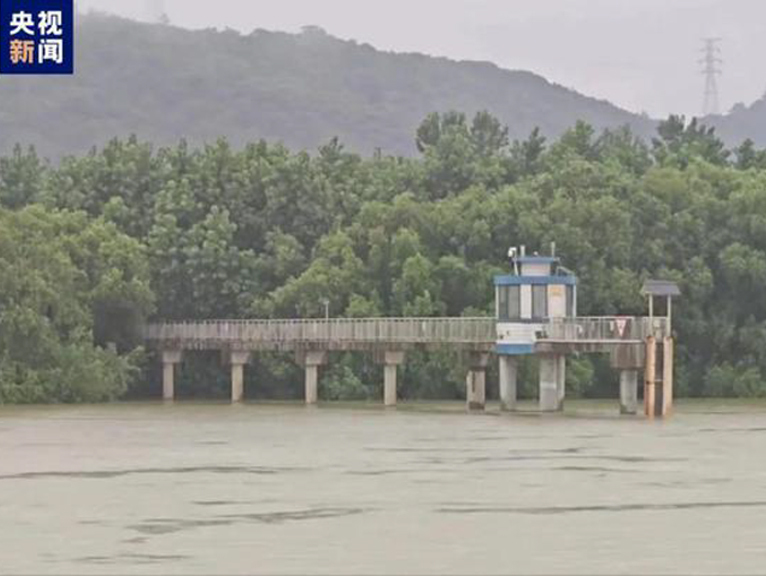
Forecasting demand for emergency relief materials resulting from flooding
1
School of Civil Engineering, Jiangxi Science and Technology Normal University, China
2
State Key Laboratory of Hydrology, Water Resources and Hydraulic Engineering, Nanjing Hydraulic Research Institute, China
Submission date: 2025-01-02
Final revision date: 2025-04-14
Acceptance date: 2025-04-23
Publication date: 2026-09-25
Corresponding author
Lang Wu
School of Civil Engineering, Jiangxi Science and Technology Normal University, 605 Fenglin Avenue, Economic Development Zone, Qin, 330013, Nanchang, China
School of Civil Engineering, Jiangxi Science and Technology Normal University, 605 Fenglin Avenue, Economic Development Zone, Qin, 330013, Nanchang, China
Archives of Civil Engineering 2026;72(3):5-21
KEYWORDS
TOPICS
ABSTRACT
Flood disasters are among the most frequent and impactful natural disasters globally, causing significant economic losses and human casualties. Accurate prediction of emergency material demand is crucial for improving rescue efficiency and minimizing losses. However, the "small sample and insufficient information" nature of flood data restricts forecasting accuracy. To address this, we propose an improved GM(1,1) dynamic forecasting model for predicting affected populations based on grey system theory. A dynamic emergency material demand model is further developed by integrating inventory management theory and predicted population data. The model was validated using a flood disaster case in Jiangxi Province, China, in June 2024. Results showed that: (1) The improved GM(1,1) model demonstrated high prediction accuracy, with the precision test Mean squared Error Ratio (MSER, c = 0.27) and Small Error Probability (SEP, p = 1) both meeting Grade I standards, making it suitable for forecasting affected populations; (2) Case analysis showed that the improved GM(1,1) model outperformed the traditional GM(1,1) model in terms of MSER (c = 0.22<0.31) and SEP (p = 1.0>0.92), with predicted values closer to actual values; (3) The dynamic demand model estimated material requirements from June 24 to July 6, including 15.48 million liters of drinking water, 14,700 tons of food, 8,700 tons of medicine, 2.9 million tents, 10.95 million quilts, and 29,000 signal stations.This study improves dynamic flood response by enabling emergency relief demand prediction and supporting deployments in civil engineering and disaster prevention, including resettlement planning, levee inspections, and identification of key transport nodes.
| eISSN: | 2300-3103 |
| ISSN: | 1230-2945 |

We process personal data collected when visiting the website. The function of obtaining information about users and their behavior is carried out by voluntarily entered information in forms and saving cookies in end devices. Data, including cookies, are used to provide services, improve the user experience and to analyze the traffic in accordance with the Privacy policy. Data are also collected and processed by Google Analytics tool (more).
You can change cookies settings in your browser. Restricted use of cookies in the browser configuration may affect some functionalities of the website.
You can change cookies settings in your browser. Restricted use of cookies in the browser configuration may affect some functionalities of the website.