


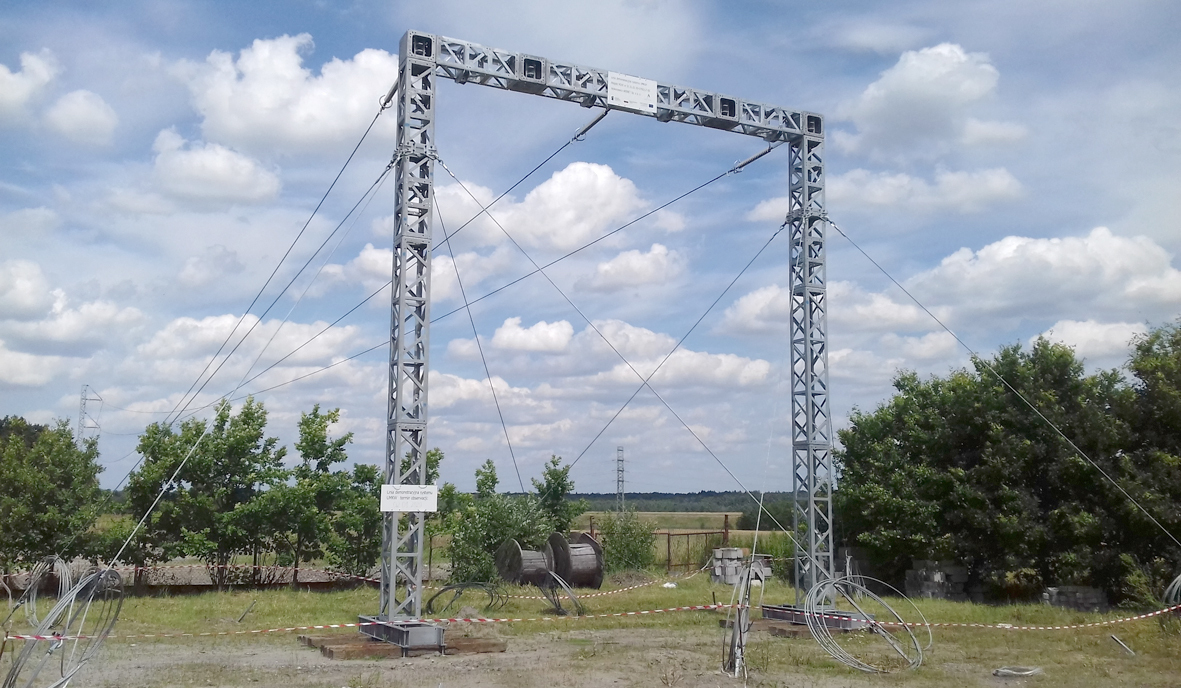
Fast design of the UMKW support structures for overhead power lines
1
Faculty of Civil Engineering, Silesian University of Technology, Poland
2
Arinet sp. z o.o., Design Office, Poland
Submission date: 2024-12-31
Final revision date: 2025-03-28
Acceptance date: 2025-04-16
Publication date: 2025-12-01
Corresponding author
Grzegorz Wandzik
Faculty of Civil Engineering, Silesian University of Technology, Akademicka, 44-100, Gliwice, Poland
Faculty of Civil Engineering, Silesian University of Technology, Akademicka, 44-100, Gliwice, Poland
Archives of Civil Engineering 2025;71(4):617-631
KEYWORDS
softwareoverhead power linestemporary supporting structuresguyed towersautomated designautomated structure modeling
TOPICS
ABSTRACT
Temporary support structures (UMKW) for power lines are used in emergency situations. Such system-based solutions require dedicated software that enables rapid design (model creation, calculations, and documentation generation). Achieving this goal involves adopting a data structure that minimizes the amount of input required from the designer while maximizing automation in each phase of the design process. This is made possible through the creation of a database of predefined and parameterized profiles for support structures. Design acceleration is enhanced by an advisory system that suggests and supervises the configuration of conductor suspension layouts, structure geometry (while maintaining electrical clearance requirements, both internal and external), structure height, etc. The declaration of load cases and their values is also fully automated. Based on data regarding conductors and insulators (retrieved from databases) and the line location within Poland territory (climatic zones), an analysis of conductors (cables) is performed, and all load cases required by standards, including variations leading to bending and torsion of support structures, are determined. The article presents two software variants differing in concept. The first variant involves a preliminary selection of structure imported from a database of pre-analyzed typical cases (UMKW-Base), while the second performs complete calculations (UMKW). The UMKW software system employs a dual data input module, enabling rapid design while achieving greater software versatility. Declaring the physical model of the structure and its automatic conversion to an analytical model allows structural calculations to be performed as well as preparation of design documentation without duplicate data entry.
| eISSN: | 2300-3103 |
| ISSN: | 1230-2945 |

We process personal data collected when visiting the website. The function of obtaining information about users and their behavior is carried out by voluntarily entered information in forms and saving cookies in end devices. Data, including cookies, are used to provide services, improve the user experience and to analyze the traffic in accordance with the Privacy policy. Data are also collected and processed by Google Analytics tool (more).
You can change cookies settings in your browser. Restricted use of cookies in the browser configuration may affect some functionalities of the website.
You can change cookies settings in your browser. Restricted use of cookies in the browser configuration may affect some functionalities of the website.