


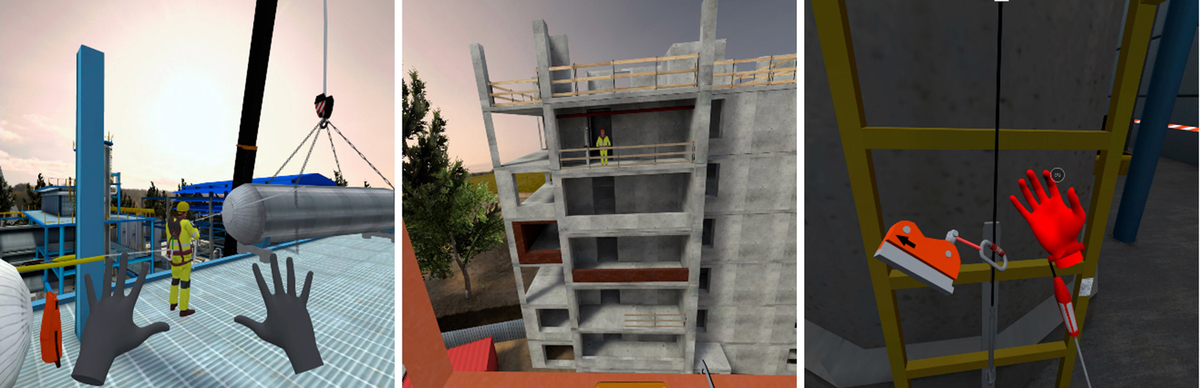
Effectiveness of occupational safety and health training in virtual reality: a comparative study with traditional methods

1
Faculty of Civil Engineering, Department of Building Engineering, Wroclaw University of Science and Technology, Poland
2
Faculty of Geoengineering, Mining and Geology, Department of Mining, Wroclaw University of Science and Technology, Poland
Submission date: 2025-07-07
Acceptance date: 2025-07-29
Publication date: 2026-09-25
Corresponding author
Mariusz Paweł Szóstak
Faculty of Civil Engineering, Department of Building Engineering, Wroclaw University of Science and Technology, 27 Wybrzeże Wyspiańskiego st., 50-370, Poland, Poland
Faculty of Civil Engineering, Department of Building Engineering, Wroclaw University of Science and Technology, 27 Wybrzeże Wyspiańskiego st., 50-370, Poland, Poland
Archives of Civil Engineering 2026;72(3):185-198
KEYWORDS
TOPICS
ABSTRACT
This article analyses the effectiveness and perception of occupational safety and health (OSH) training using virtual reality (VR) compared to traditional methods. The aim of the study was to verify the effectiveness of VR training compared to traditional methods (Research No. 1) and to analyse the impressions of participants with different experiences with VR in the training system (Research No. 2). Research No. 1, conducted on students in the fields of construction and occupational health and safety, compared test results after traditional training (in person / online training) and VR (the “VR training at work at height” application). Research No. 2 included active construction workers, analysing their opinions on the usefulness, engagement, and impact of VR training on hazard knowledge, using questionnaires and participant observation. Research No. 1's results showed a significant improvement in test scores after VR training (an average increase of 22%), suggesting a higher effectiveness of this method. In Research No. 2, participants rated highly the usefulness of VR in health and safety training, comfort with VR devices, and their own participation. The results of the study confirm the effectiveness of VR training in occupational safety and health, increasing the effectiveness and participation of participants. Immersion, visualisation, and simulation of harsh working conditions are key advantages of this technology. The VR training system combines the experience of virtual reality with learning theory, simulating emergency response procedures and procedures for the use of personal protective equipment.
Share
RELATED ARTICLE
| eISSN: | 2300-3103 |
| ISSN: | 1230-2945 |

We process personal data collected when visiting the website. The function of obtaining information about users and their behavior is carried out by voluntarily entered information in forms and saving cookies in end devices. Data, including cookies, are used to provide services, improve the user experience and to analyze the traffic in accordance with the Privacy policy. Data are also collected and processed by Google Analytics tool (more).
You can change cookies settings in your browser. Restricted use of cookies in the browser configuration may affect some functionalities of the website.
You can change cookies settings in your browser. Restricted use of cookies in the browser configuration may affect some functionalities of the website.