


Warm Mix Asphalt (WMA) evaluated using different stiffness modulus measuring methods

1
Faculty of Civil Engineering and Architecture, Kielce University of Technology, Poland
2
Faculty of Civil Engineering, Warsaw University of Technology, Poland
Submission date: 2025-05-23
Final revision date: 2025-08-29
Acceptance date: 2025-09-02
Publication date: 2025-12-01
Corresponding author
Archives of Civil Engineering 2025;71(4):123-137
KEYWORDS
TOPICS
ABSTRACT
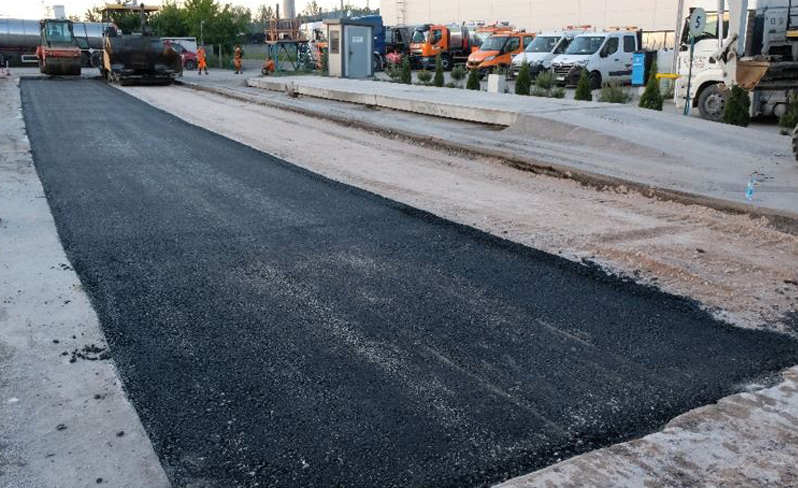
This study evaluates and compares the results of two distinct stiffness measurement methods - Direct Cyclic Compression test (DCC) and Indirect Tensile test (IT-CY) - applied to warm mix asphalts (WMA) reinforced with basalt fibres intended for the construction of durable and high-performance pavements, specifically surface and road base layers. The asphalt mixtures analyzed comprised surface course asphalt concrete and high-modulus asphalt concrete. The production process employed reduced temperatures during both manufacturing and paving, facilitated by the use of a bio-derived fluxing additive and the foaming of the bituminous binder. These mixtures incorporated polymer-modified bituminous binders and dispersed fibre reinforcement. Their performance was compared against that of traditional hot mix asphalt (HMA) mixtures. The findings revealed that the direct compression modulus provided a more effective differentiation of mixtures based on the impact of fibre reinforcement. Conversely, the indirect tensile stiffness test high-lighted greater variability due to differences in production techniques (HMA vs. WMA) and compaction temperatures. These differences were attributed to variations in the volumetric properties of the samples, influenced by the compaction process. Regarding performance, fibre reinforcement enhanced the complex stiffness modulus across all mixtures. However, the adoption of the WMA technique significantly reduced this parameter. Laboratory test results were further compared with data obtained from samples collected from an experimental road section.
Share
RELATED ARTICLE
| eISSN: | 2300-3103 |
| ISSN: | 1230-2945 |

We process personal data collected when visiting the website. The function of obtaining information about users and their behavior is carried out by voluntarily entered information in forms and saving cookies in end devices. Data, including cookies, are used to provide services, improve the user experience and to analyze the traffic in accordance with the Privacy policy. Data are also collected and processed by Google Analytics tool (more).
You can change cookies settings in your browser. Restricted use of cookies in the browser configuration may affect some functionalities of the website.
You can change cookies settings in your browser. Restricted use of cookies in the browser configuration may affect some functionalities of the website.